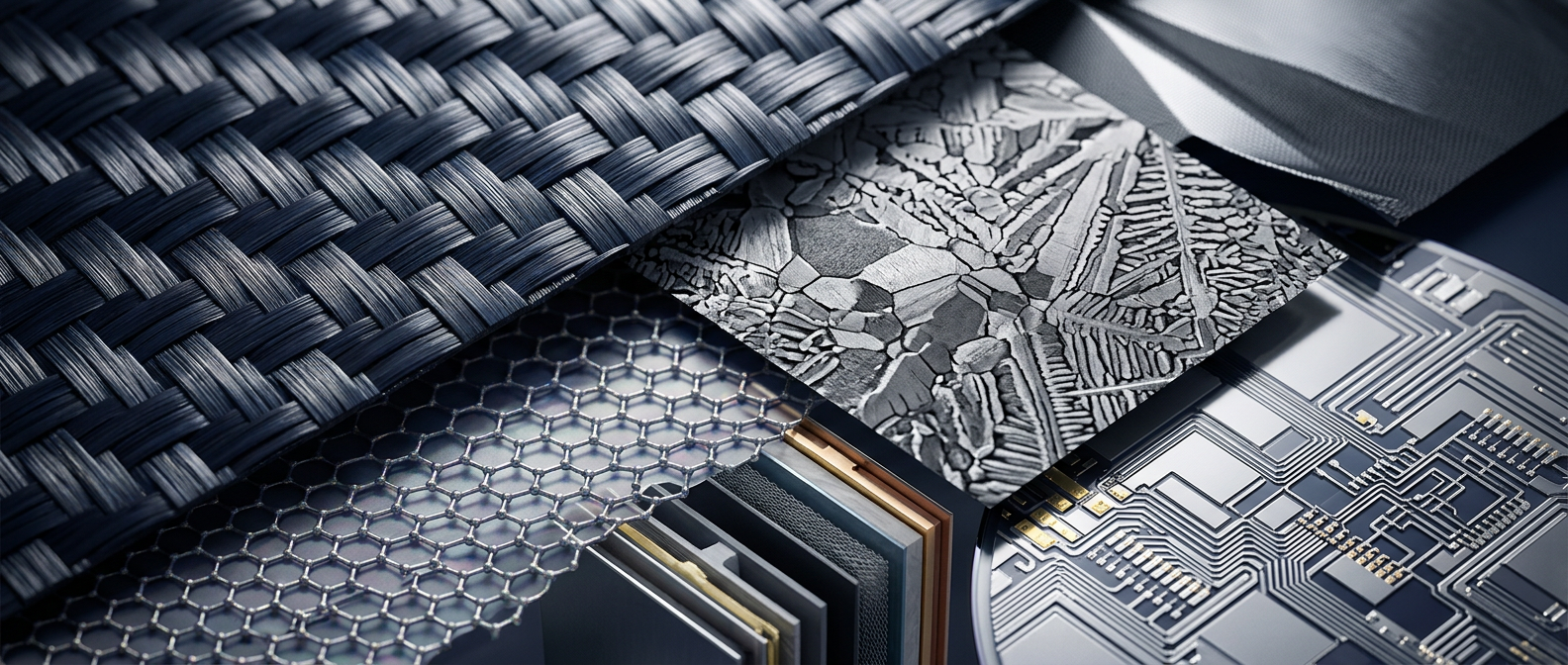
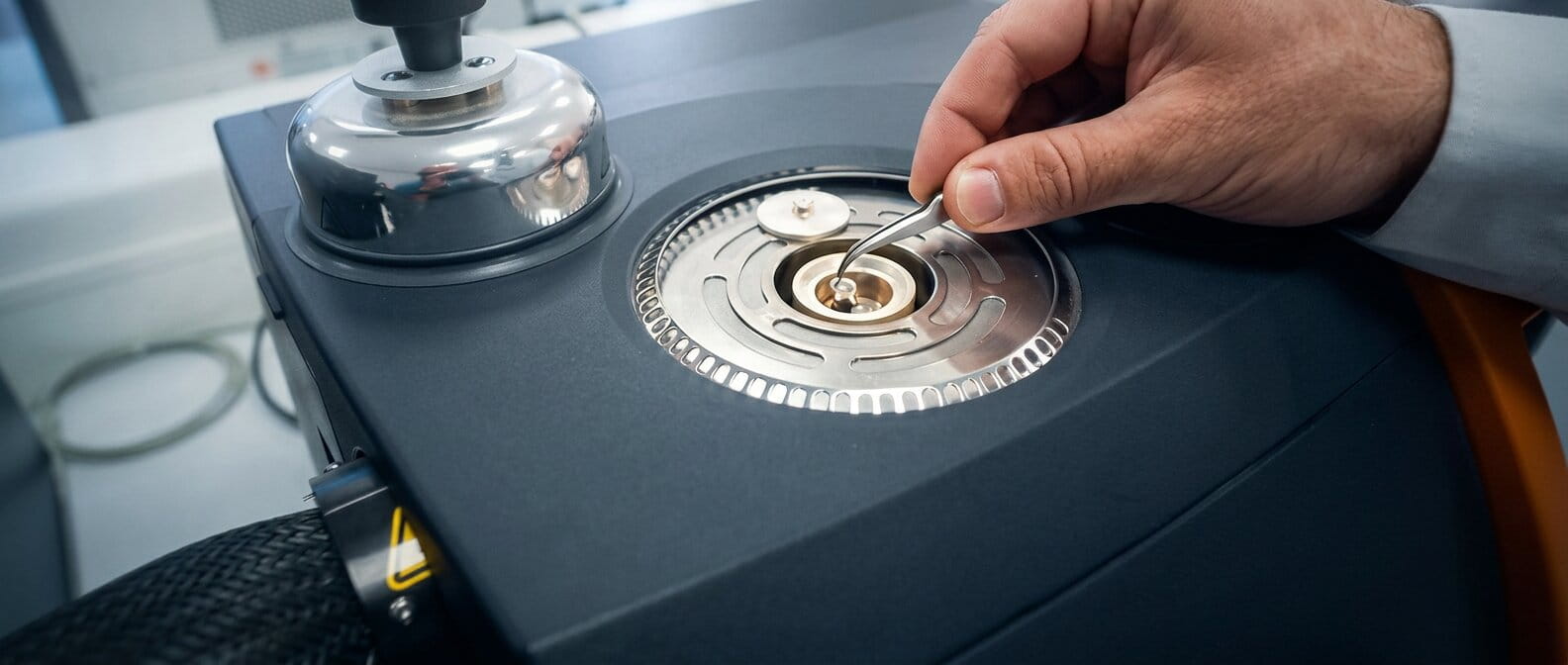
Materials Science and Engineering laboratory at Aristotle University of Thessaloniki
Five-year Integrated Master · English-taught · EQF Level 7

A five-year programme built at the intersection of science and engineering.

Materials Science & Engineering at AUTh brings together three of Greece's strongest Schools in a single interdisciplinary, English-taught programme — designed to develop advanced scientific knowledge, engineering capacity and research-ready expertise.

40
Students admitted per year
5
Years of study
300
ECTS credits
100%
Taught in English

Excellence in research & innovation

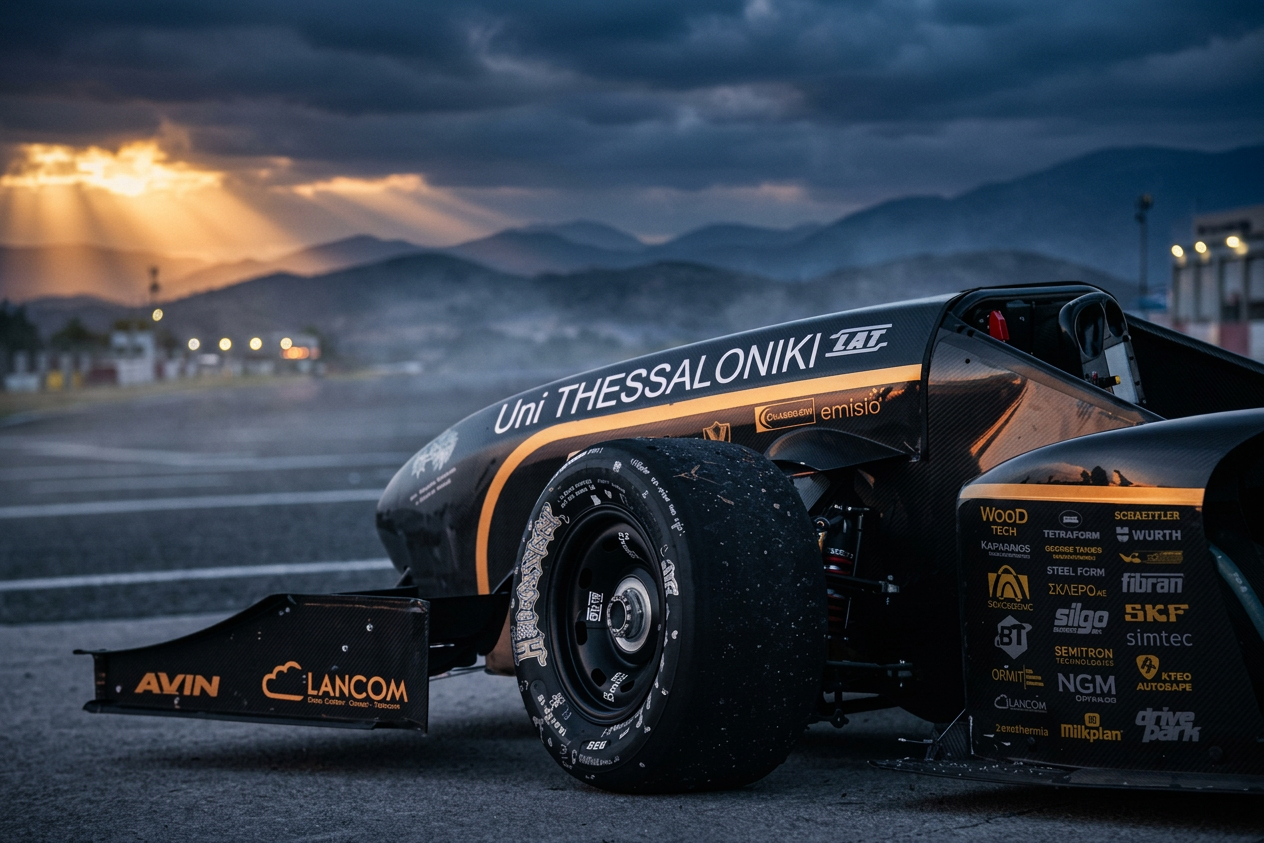
Aristotle Racing Team · 10+ years
1st place
Greek & Croatian international competitions
Student-led engineering excellence born from these departments — applied at speed.
European Space Agency
AUTh Chemistry has contributed to multiple ESA space missions.
Research from this department has reached beyond Earth. Your future supervisor may have worked on a space mission.
SPACE
ScholarGPS · 2025
0.5%
of all academics worldwide
Chemistry faculty ranked among the world's most distinguished scholars by lifetime academic contribution.
Elsevier–Stanford · 2025
Top 2%
of researchers globally
31 faculty across the three partner departments cited among the world's most-cited scientists.
Innovation in cultural heritage
Archaeological Materials Science through Erasmus Mundus
The program advances global awareness of archaeological heritage preservation, strengthens quality international education, and equips graduates with multidisciplinary skills for high-impact careers across the cultural heritage sector.
CULTURE
The interdisciplinary model

Three disciplines. One coherent program.

Materials Science & Engineering is inherently interdisciplinary — it cannot be taught from within a single department. Understanding how a material behaves requires Chemistry to know what it is made of, Physics to understand its properties, and engineering to know how to process, shape and apply it.

This program brings together three of AUTh's strongest departments — Chemistry, Physics, and Mechanical Engineering — each contributing its core expertise to a unified curriculum. You will not study three separate subjects. You will study one field, seen through three complementary lenses.

The result is graduates who understand materials at a depth that specialists from a single discipline cannot match — and who are equipped to work across the full chain from discovery to application.

Chemistry
Dept. of Chemistry
Atomic structure Synthesis Thermodynamics Electrochemistry Polymers Corrosion
Physics
Dept. of Physics
Crystal structure Electronic properties Magnetism Optical properties Nanostructures Characterisation
Engineering
Dept. of Mechanical Engineering
Mechanics Processing Additive manufacturing Composites Design Sustainability
converge into
Materials Science & Engineering
From atomic structure to industrial application —
One unified field.
What you will study

A curriculum that builds from foundations to frontiers.

The program is structured to take you from the fundamental principles of materials science in the early years, through advanced specialisation and laboratory work in the middle years, to original research in the final year. Every semester builds on the last.

1–2
Foundations
  • Mathematics and computational methods
  • General chemistry and physical chemistry
  • Classical and quantum physics
  • Introduction to materials science
  • Mechanics and thermodynamics
  • Laboratory skills from semester one
3–4
Specialisation
  • Advanced materials characterisation
  • Electronic, optical and magnetic materials
  • Composite and structural materials
  • Energy and functional materials
  • Additive manufacturing and processing
  • Elective modules in chosen specialisation
5
Advanced research & thesis
  • Advanced elective modules (EQF Level 7)
  • Original two-semester research thesis
  • Supervision by research-active faculty
  • Access to partner research centres
  • Industry collaboration possible
  • Preparation for doctoral studies
View the full curriculum → Curriculum & Courses
What you will be able to do

Graduate outcomes.

Graduates of this program are equipped to work across a wide range of industries, research environments and institutional settings — in Europe and internationally. The depth of the interdisciplinary training opens doors that single-discipline degrees do not.

Design and develop advanced materials
Select, synthesise and characterise materials for specific engineering applications across energy, aerospace, biomedical and manufacturing sectors.
Work across the full materials value chain
From raw material selection and processing through to product design, performance evaluation and end-of-life sustainability assessment.
Contribute to research and innovation
Conduct independent research, work alongside leading scientists, and contribute to the development of new materials and manufacturing processes.
Apply engineering knowledge in complex materials challenges
Graduates develop the scientific depth, technical judgement and interdisciplinary capacity required to contribute to advanced materials design, industrial innovation and applied engineering environments.
Continue to doctoral studies
The research training in the Integrated Master provides a strong foundation for PhD programs at AUTh and leading European and international universities.
Lead interdisciplinary teams
The breadth of the program trains graduates to communicate across scientific and engineering disciplines — a critical skill in modern industrial and research environments.
Your study path

One integrated five-year academic pathway.

The programme is designed as a complete five-year route from scientific foundations to advanced materials engineering, research practice and applied innovation. Instead of separating undergraduate and postgraduate study into two disconnected cycles, AUTh offers one coherent 300 ECTS pathway.

European context
Beyond the standard Bachelor + Master route
Typical European model  ·  separated study cycles
  • Many European programmes separate materials education into a Bachelor followed by a Master’s degree
  • Students often need a second application process to continue into advanced study
  • The transition between cycles may interrupt academic continuity and research progression
  • Specialisation is often delayed until postgraduate level
  • Research training may depend on securing a separate Master’s place
  • AUTh integrates the full academic pathway into one structured five-year programme
A coherent alternative. The AUTh model gives students a continuous route from fundamentals to advanced specialisation, without splitting the learning journey into separate degrees.
Diploma with Integrated Master · EQF Level 7
Diploma with Integrated Master in Materials Science & Engineering
5 years  ·  300 ECTS  ·  10 semesters
  • Integrated five-year curriculum from core science to advanced engineering applications
  • Advanced specialisation in materials design, processing, characterisation and performance
  • Original research thesis with faculty supervision
  • Access to partner labs: EKETA, ThessIntec, Alumil and more
  • Industry collaboration possible for thesis projects
  • EQF Level 7 — equivalent to a standalone Master’s degree
Advanced scientific and engineering capacity. Graduates develop the knowledge, laboratory experience, research maturity and interdisciplinary problem-solving skills required to contribute across modern materials science, industrial innovation and technology-driven sectors.
Explore the programme

Everything you need to know.

Each section below goes deeper into a specific aspect of the programme. We recommend reading the BSc or Integrated Master page first, then exploring the curriculum and facilities.

Integrated Master
The 5-year path, advanced specialisation, research thesis structure and EQF Level 7 learning outcomes.
Curriculum & courses
The full course list, semester by semester. Filter by year, discipline, or type. Download the curriculum PDF.
Labs & facilities
The laboratory infrastructure you will have access to — equipment, research centres, and industry partners.
News & insights

Latest from the Materials Science & Engineering programme.

Programme updates, research highlights, and guides for prospective students — written to help you make the most informed decision about your future.

News update visual for programme announcement
Article · 19 April 2026

Why choose a five-year Integrated Master in Materials Science & Engineering?

A five-year integrated programme gives students a continuous route from scientific foundations to advanced engineering knowledge, research training and applied materials innovation — without separating the journey into two disconnected degrees.

Read article →
News update visual for research development
Article · 10 April 2026

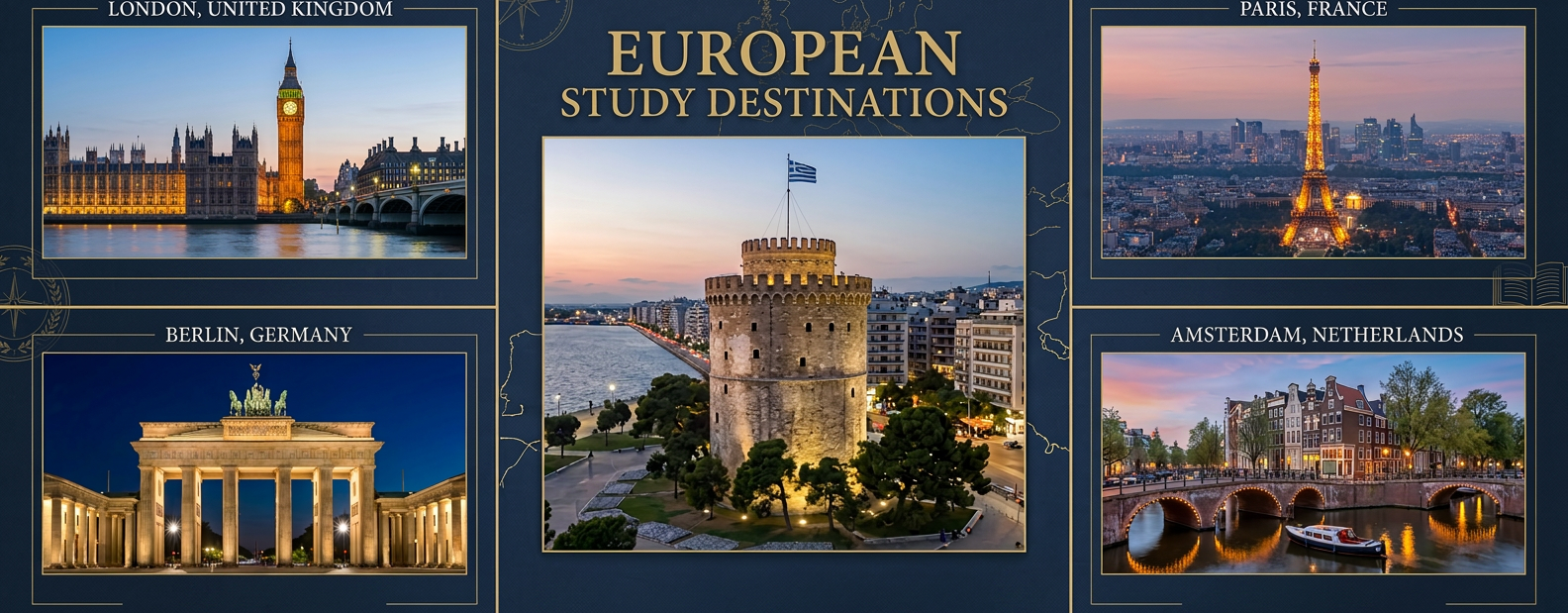
The real cost of studying Materials Science & Engineering in Europe: a country-by-country comparison for 2026

Tuition fees across Europe vary by a factor of ten. This guide compares the true cost — tuition plus living — of studying MSE in Greece, the Netherlands, Belgium, Germany and the UK, with full data for 2026.

Read article →
News update visual for student life or campus event
Article · 29 Mar 2026

What is Materials Science & Engineering — and why is it one of the most in-demand engineering disciplines of the next decade?

Materials science engineers design the batteries in electric vehicles, the alloys in aircraft, the semiconductors in your phone, and the implants in the human body. This article explains what the field is, what MSE graduates do, and why demand for them is growing faster than almost any other engineering discipline.

Read article →
Ready to take the next step?
Applications are open for the 2026–27 academic year.
40 places available. Review entry requirements, fees and deadlines before applying.