AUTh research reaches space: frying potatoes in microgravity for future astronaut missions.
Researchers from Aristotle University of Thessaloniki have gained international recognition for an unusual but highly scientific question: can potatoes be fried in space? Behind this simple idea lies a complex research challenge connected to heat transfer, fluid dynamics, food science, astronaut nutrition and the future of long-duration space exploration.
The work was carried out by the Multiphase Systems Dynamics Group of the Laboratory of Chemical and Environmental Technology at AUTh, under the scientific direction of Professor Theodoros Karapantsios, Head of the MSEn programme. The research comes from the School of Chemistry — one of the three Schools contributing to the Materials Science & Engineering Integrated Master.
A bold scientific question.
The research was carried out by the Multiphase Systems Dynamics Group of the Laboratory of Chemical and Environmental Technology at AUTh, under the scientific direction of Professor Theodoros Karapantsios, Head of MSEn. The team studied how frying behaves under microgravity conditions, where the absence of normal buoyancy can significantly alter the way vapour bubbles form, move and detach from the surface of food. For MSEn students, the work is a strong example of how fundamental transport phenomena, interfaces, thermal behaviour and experimental design can connect to highly unconventional engineering problems.
Why frying changes in microgravity.
On Earth, when a potato is placed in hot oil, water inside the potato turns into vapour and forms bubbles that rise naturally due to gravity. In microgravity, however, this process becomes much less predictable.
If bubbles remain attached to the potato surface, they can create a vapour layer that prevents proper heat transfer and affects cooking quality. Understanding this phenomenon is therefore important not only for food preparation in space, but also for broader scientific applications involving boiling, heat exchange and multiphase flows.
Tested in weightlessness.
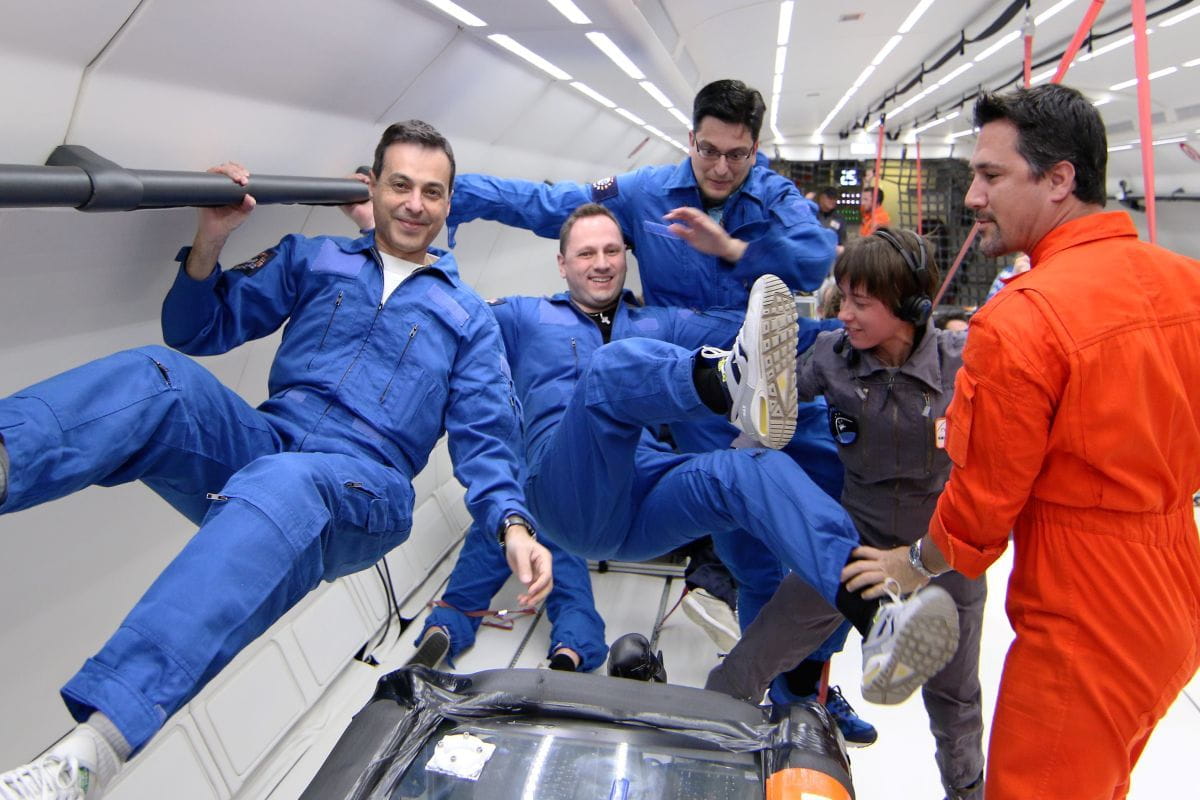
To investigate the process, the AUTh research team developed a specialised experimental frying device suitable for microgravity testing. The apparatus was used during parabolic flight campaigns supported by the European Space Agency, where aircraft perform repeated flight arcs to create short periods of weightlessness. During these brief intervals, the team recorded the frying process with high-speed cameras and collected detailed measurements related to bubble formation, temperature changes and oil behaviour.
Why it matters, on Earth and beyond.
The significance of the research extends beyond the idea of serving fried potatoes in space. Food plays an important psychological and nutritional role in human spaceflight, especially during long missions where astronauts may spend months or years away from Earth. The ability to prepare more familiar meals could improve quality of life, morale and overall well-being in space habitats.
At the same time, the scientific value of the work reaches into several engineering fields. The study of frying in microgravity contributes to a deeper understanding of heat and mass transfer, bubble dynamics, closed-system cooking technologies and energy-efficient thermal processes. These insights may also support innovations on Earth, including improved frying technologies, reduced energy consumption and better control of food quality.
The international visibility of this research, including its recognition by the European Space Agency, highlights the strong scientific capacity of Aristotle University of Thessaloniki in applied research with global relevance. For MSEn, it also illustrates the breadth of the scientific environment surrounding the programme: behaviour at interfaces, heat and mass transfer, experimental characterisation and process engineering can become central questions even in problems as unexpected as preparing food in space.